every big idea started as a "what if"
Design thinking and entrepreneurship, in WA primary schools.
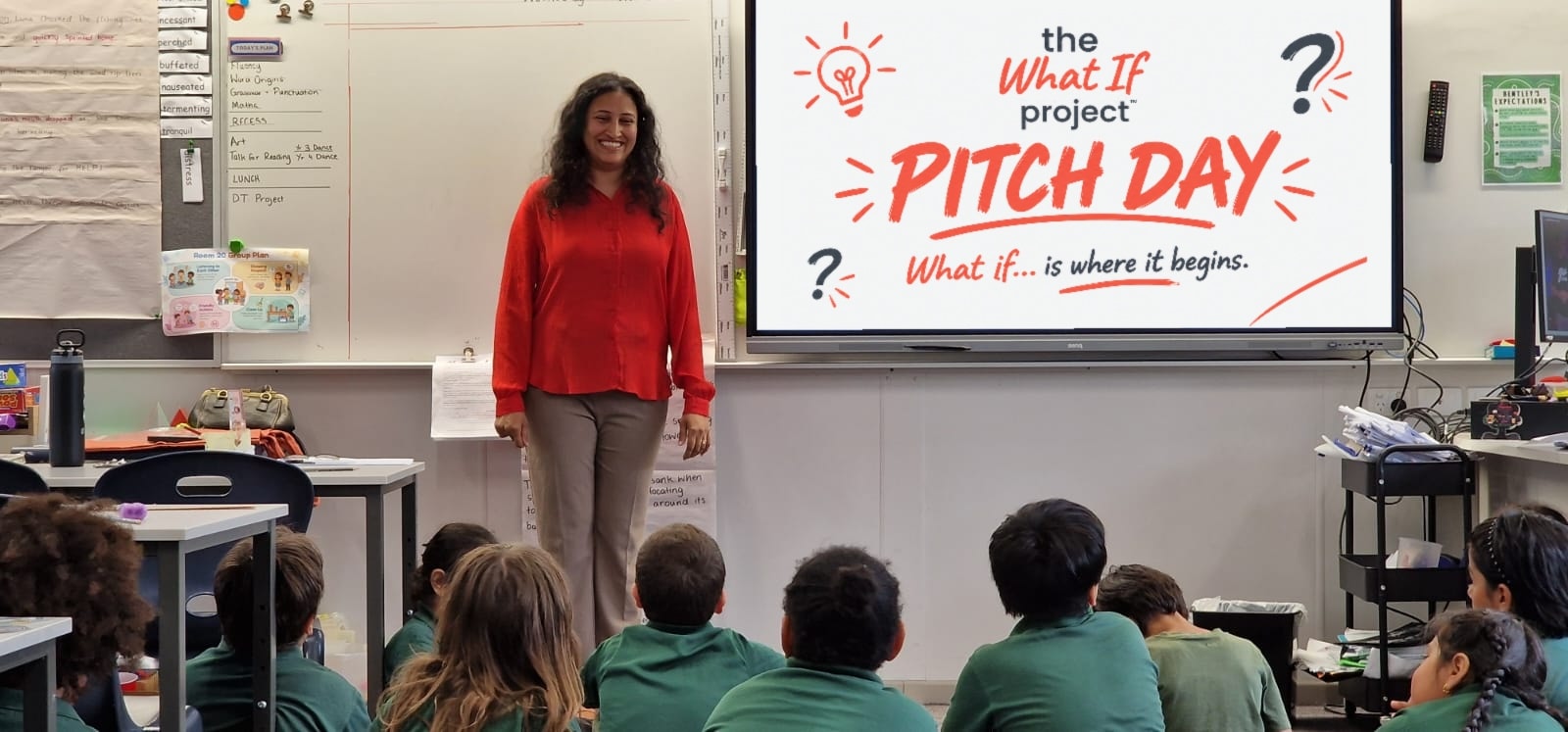
Four sessions and a live Pitch Day. Students find a real problem, build something rough that tests their idea, and stand up and pitch it to a panel of judges. Delivered in Western Australian primary schools.
The Program
Students learn the steps of how to identify problems which become opportunities for them to find solutions for — and then how to come up with a solution, build it, and deliver it to a panel of judges on Pitch Day as an in-class competition.
The program is delivered class-by-class, so students stay in their own environment throughout. This keeps them comfortable as they build confidence in entrepreneurship as a new concept.
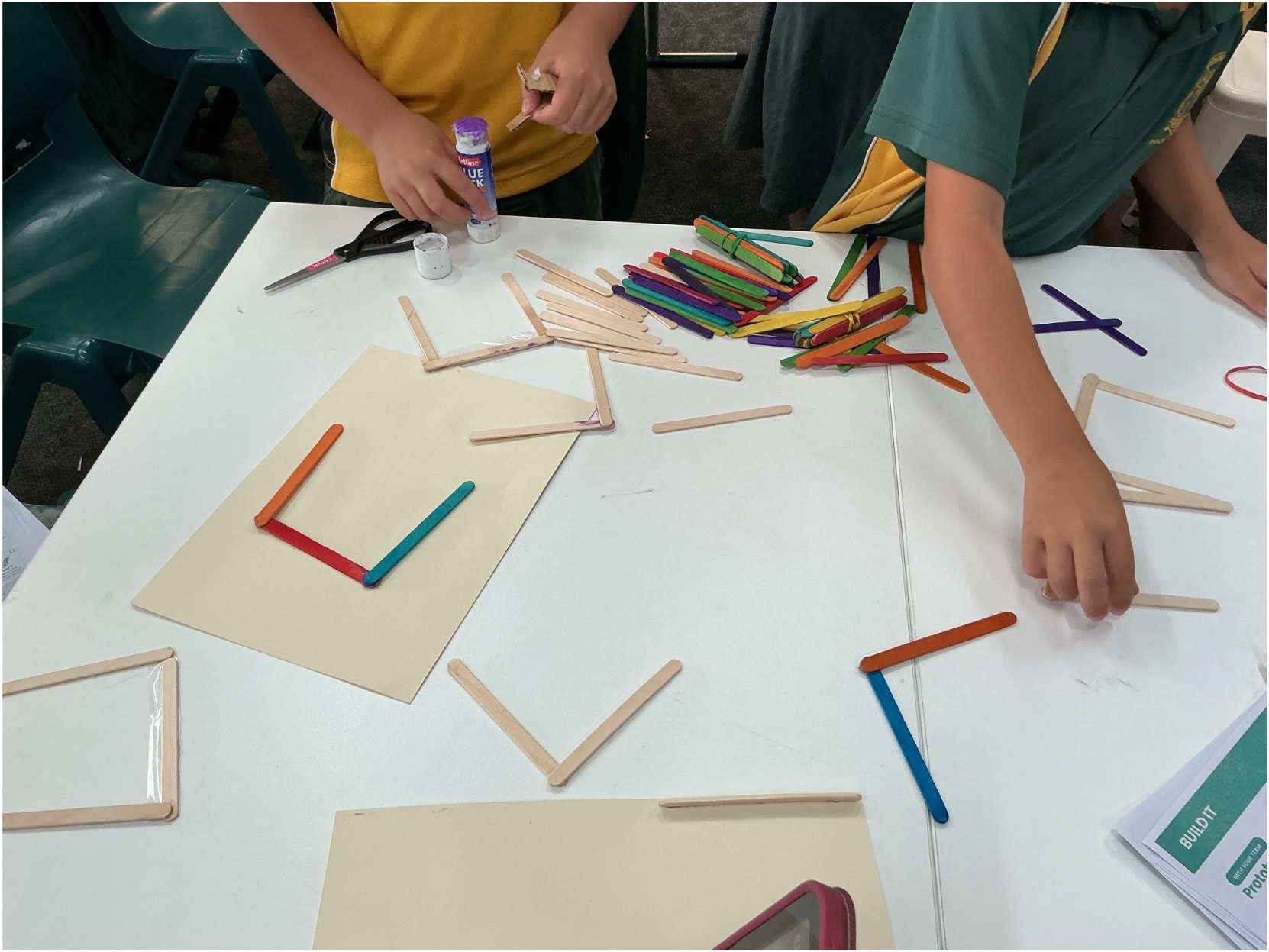
In an already tech-heavy world for kids, this program is refreshingly hands-on, where students work with crayons, markers, cardboard, glue, sticky tape, and other everyday craft and recycled materials to build and test their ideas. Students have the option to use technology for their Pitch Day presentation if they choose. Beyond the pitch itself, the program builds teamwork, interpersonal communication, leadership, methodical thinking, presentation, and time management — the skills demonstrated in real-life entrepreneurial ventures.
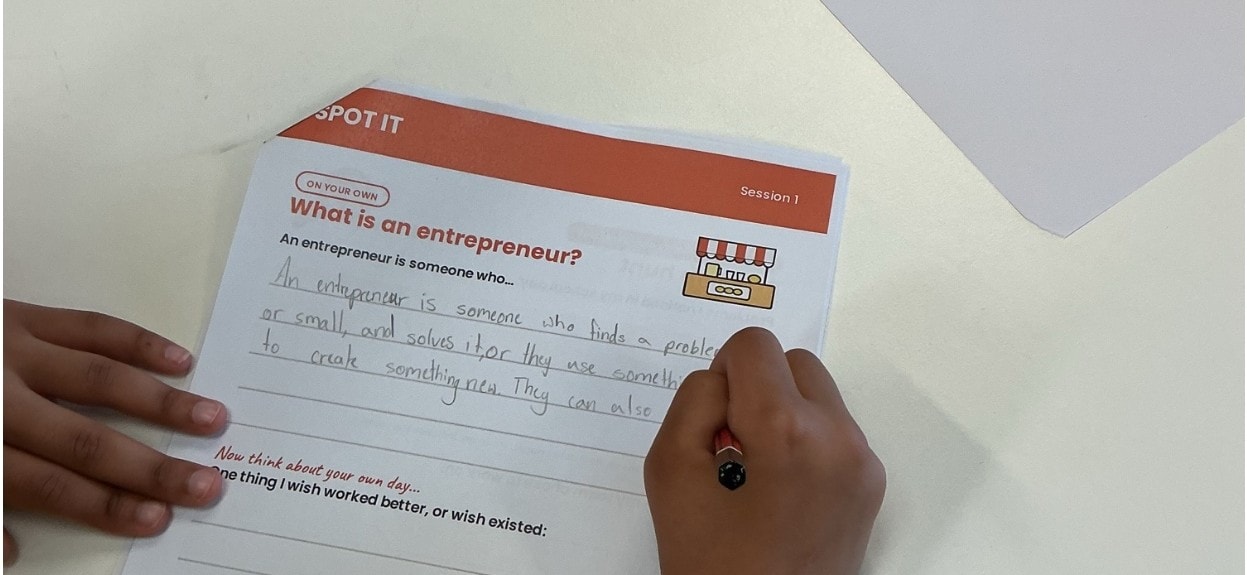
Each student keeps an individual design journal that records every step and is handed in at the end, so the classroom teacher has evidence of student thinking for assessment.
"The What If Project is an engaging, hands-on program that introduces students to entrepreneurship in a practical, age-appropriate and fun way. Students learn to identify problems, generate ideas, create prototypes and pitch their solutions while developing teamwork, creativity and problem-solving skills. The presenter brings genuine entrepreneurial expertise and creates an environment where students feel excited to take risks and share their ideas."
- "Thank you for making my dream subject come to life, please come back soon."
- "Thanks for hosting the What If Project! We had lots of fun!"
- "Thank you for helping us answer a big question: What if!"
— Student participants
"A fantastic program with minimal prep needed that ticks all the D&T curriculum boxes."
- "Thank you for making my dream subject come to life, please come back soon."
- "Thanks for hosting the What If Project! We had lots of fun!"
- "Thank you for helping us answer a big question: What if!"
— Student participants
Why this, and why now?
Entrepreneurship appears in high school as competitions, electives, business plan challenges, and pitch nights. Students who take part are often the ones who already know what it involves, because someone in their life has shown them. This program gives every student in the class that opportunity.
✔ Year 4-6 students are old enough to run a team and see an idea through — and young enough to enjoy it.
✔ Give them the whole cycle once and they'll recognise it when entrepreneurship opportunities appear in high school and in life beyond.
✔ Western Australian schools started teaching the revised Technologies curriculum in 2026 — Design thinking is now written into every year level.
✔ This program was built for that curriculum. Teachers receive individual evidence of student participation for assessment.
Why WA Primary Schools
Our WA students deserve the same opportunities that exist anywhere else in the world, with cost not being a barrier. The material in this program comes from some of the best entrepreneurship teaching and industry experience globally — rewritten, tested and cut down until it works for primary school students, with no technology and no prior knowledge required.
The case for starting early is also backed by research. The World Economic Forum's Future of Jobs Report 2025 puts creative thinking and leadership among the top five skills employers need most, with close to 40% of the skills used in today's jobs expected to change by 2030. Australia's own Prosperity through Innovation strategy makes the same case for schools - alongside STEM, students will need creative, interpersonal, problem-solving and entrepreneurial skills to thrive in the jobs of the future. PwC modelling puts a number on the economic upside — moving just 1% of Australia's workforce into STEM-related roles is estimated to add $57.4 billion to GDP over 20 years.
Getting in early helps. A review of entrepreneurship education by UK innovation foundation Nesta found the benefits are greatest when students get consecutive entrepreneurial experiences starting at primary school. Academic studies back this up as well - a study published in the Entrepreneurship Research Journal found a measurable rise in entrepreneurial intention among primary school pupils after a short program, with similar confidence gains reported in studies of children as young as eleven.
This is why The What If Project is designed for our young children here in Western Australia.
About Rashmi Kelkar

The What If Project™'s program was developed by Rashmi Kelkar. Rashmi is the Director of Boorloo Capital, a Perth-based investment company working across private equity and venture capital.
She has volunteered at the ION Hub in Houston, Texas — a startup and innovation hub supporting early-stage founders; volunteered as a Business Coach at Memorial Assistance Ministries for aspiring migrant and underserved communities in Houston, Texas; and is a co-founder of a startup based in Ohio, United States.
Earlier, she was a Manager in the Business and Private Banking divisions at National Australia Bank, before moving into business ownership, entrepreneurship and further study.
Rashmi completed her MBA at Brown University, an Ivy League university in the United States, and IE Business School in Spain, ranked 1st for entrepreneurship in Bloomberg Businessweek's 2026–27 Europe and Middle East business school ranking. She received the IE Brown MBA Dean’s Scholarship from the IE Foundation.
The program takes design thinking and entrepreneurship material taught at that level and rewrites it for primary school students, mapped to the Western Australian Curriculum.
Articles
Rashmi Kelkar
25 November 2026 · LinkedIn article
What 9-Year-Olds Taught Me About a 70-Year-Old Rule: What the Evidence Says About "No Bad Ideas" Brainstorming
The "no criticism" rule has a 70-year-old origin and a contested evidence base. After running design thinking sessions with Year 4 students at Rossmoyne Primary and Bentley Primary, I dig into what the research actually says — and what three small shifts can make brainstorming work for every child in the room.
Talk to us about your school
For a program brief, the curriculum mapping, or a conversation about whether this fits your class, get in touch.